Hedgerows: The Living Boundaries Between Nature and Spirit
Hedgerows are far more than simple field boundaries. They are ancient living ecosystems, woven into the landscape for centuries, providing shelter for wildlife, supporting biodiversity, and carrying with them a rich tapestry of folklore, tradition, and spiritual meaning.

The Biodiversity of the Hedge
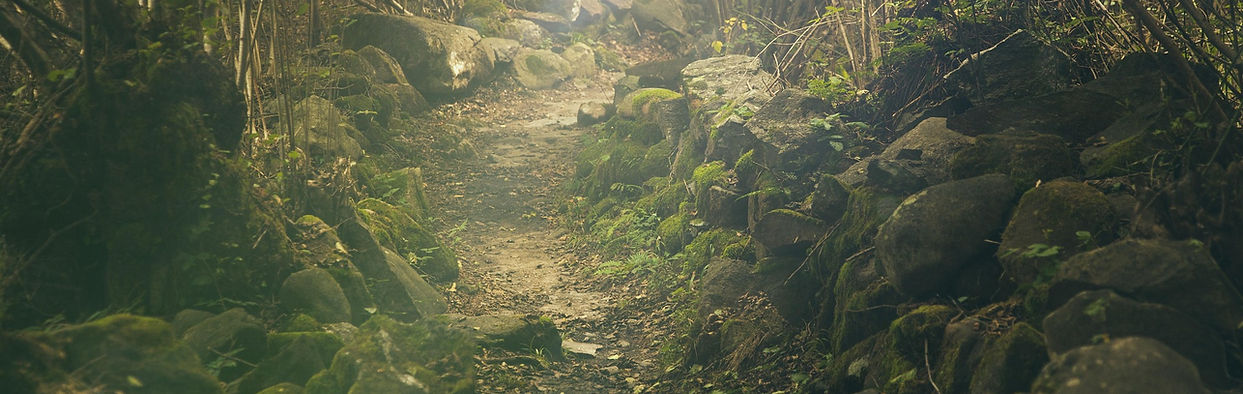
The origins of many hedgerows can be traced to the earliest phases of agricultural expansion, when woodland was systematically cleared to create arable land. It is widely accepted that strips of woodland intentionally retained around the margins of these newly established fields evolved into some of the earliest living hedgerows. Such fields are known as assarts, while the enclosing boundaries are referred to as assart hedgerows. Although assarting is most commonly associated with the medieval period, the clearance of woodland to create new agricultural land occurred during several earlier and later phases of landscape development. Hedgerows are the whispers of ancient woodlands, a living juxtaposition between the wild forests of wildlife and folklore and the ordered agricultural landscapes they enclose.
Historical maps, estate records, and other documentary evidence indicate that some hedgerows have remained in continuous existence for more than a millennium, with others potentially originating in the Bronze Age or earlier. This antiquity is supported by archaeological evidence, including the discovery of a fragment of blackthorn in Cambridgeshire that has been dated to approximately 2000 BCE and is believed to have formed part of an early hedgerow.
Havens for Wildlife
One of the most studied benefits of hedgerows is the incredible diversity of life they support. This is partly due to their unique structure: a shaded core of trees surrounded by sunnier layers of shrubs, grasses, and ground plants. These different habitats create spaces for both woodland and grassland species to thrive. Modern ecologists increasingly recognise hedgerows as ecosystems in their own right. They provide essential habitats in landscapes heavily shaped by humans, offering food, shelter, and travel routes for countless species.
One British ecologist monitoring a diverse old hedge recorded over 2,000 species living in and around it, including insects, mammals, birds, fungi, mosses, and reptiles. Birds and small mammals use hedges for nesting and protection, while flowering plants attract pollinators such as moths, flies, and beetles. Autumn berries provide vital food through the colder months.
Hedgerows also benefit the wider environment. They can reduce soil erosion, protect against flooding, cool the landscape, support pollinators, store carbon, and help maintain healthier ecosystems by supporting greater biodiversity.
The Hedge as a Liminal Space
Beyond their ecological importance, hedgerows have long held symbolic meaning. They are more than boundaries; they are liminal spaces — places that exist between two worlds. For centuries, the hedge marked the meeting point between the ordered, cultivated world of fields, farms, and human settlement, and the untamed world of woodland, forest, and wilderness beyond. They represented the edge of civilisation, a place where the familiar met the unknown. In folklore, this in between quality gave hedgerows a sense of mystery and power. The tangled roots, shadowed pathways, and hidden life within the hedge made them places where the natural and supernatural worlds were believed to overlap.
The Wisdom of the Hedgerow Plants in Cymru and Britain
The plants growing within the hedgerows of Cymru are more than sources of food and medicine. They are part of an ancient landscape filled with memory, folklore, and stories. For generations, the people of Cymru have looked to the trees and plants around them not only for what they provide, but for the meanings and traditions carried within them.
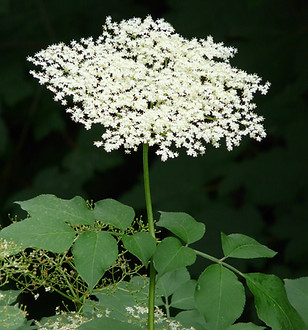
Ysgaw (Elder) has long been treated with respect in Welsh folklore. The elder tree was believed to hold a protective spirit, often known as the Mam Ysgawen (Elder Mother), who watched over the hedgerow and the land around it. It was said that cutting an elder without permission could bring bad luck. At the same time, the tree was valued for its practical uses, with elder flowers and berries gathered for food, drinks, and traditional remedies.
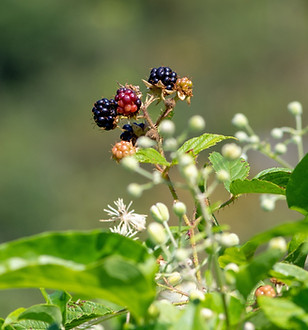
Mwyar Duon (Blackberries) are one of the most familiar treasures of the Welsh hedgerow. Gathering blackberries was a seasonal tradition, but folklore warned that they should not be picked after Michaelmas (29 September), when it was said that they had been spoiled by darker forces. The story reflects an older understanding that the hedgerow has its own rhythms and that nature should be respected rather than taken without thought.
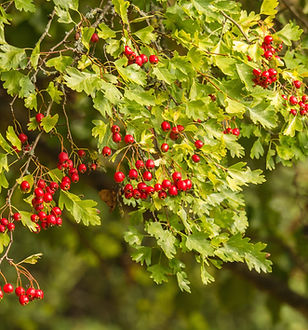
Draenen Wen (Hawthorn) is one of the most important trees in Welsh folklore. Found along boundaries, old pathways, and field edges, it naturally belongs to those places where the human world meets the wild. These liminal spaces were often associated with Y Tylwyth Teg, the Fae folk of Welsh folklore. A lone hawthorn tree was treated with care and respect, as it was believed to be a place where the Otherworld could come close to our own.
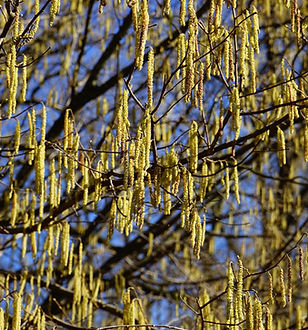
Collen (Hazel) is traditionally connected with wisdom, knowledge, and inspiration. Hazel nuts were believed to carry the gift of understanding, and the tree became associated with learning and creativity. Hazel wood was also valued for everyday use, especially for walking sticks and staffs, linking the practical and the symbolic.

Draenen Ddu (Blackthorn) was regarded as a powerful and mysterious tree. Its dark wood and sharp thorns gave it associations with protection and boundaries. It was used for walking sticks and staffs, and its fruit, the sloe, was gathered for food and drink. Like many plants of the hedgerow, blackthorn was respected as something useful but never to be treated carelessly.

Criafol (Rowan) was known as a protective tree in Welsh folklore. Its bright red berries were associated with guarding against harm, and branches or berries were sometimes kept near homes for protection. Rowan was valued not only for its beauty but for the belief that it helped keep away unwanted influences.
The plants of the Welsh hedgerow show how deeply connected the people of Cymru have always been with the natural world. These trees and plants are part of a living landscape where history, folklore, and ecology meet. Walking beside a hedgerow is to walk through a place shaped by generations of gathering, storytelling, and respect for the land. The old stories remind us that these plants are not just part of the scenery, they are part of the heritage of Wales, carrying echoes of those who came before and the traditions that still grow alongside them.
Walking the Ancient Path
Hedgerows are living reminders of the relationship between people and the natural world. They are places where history, ecology, folklore, and spirituality meet.
The next time you walk beside a hedge, take a moment to notice the life within it; the birds, insects, blossoms, roots, and ancient trees. These green pathways carry echoes of those who walked before us.
If you forage from the hedgerow, do so with respect. Traditional wisdom reminds us to honour the plants, take only what is needed, and remember that every hedge has its own story to tell.